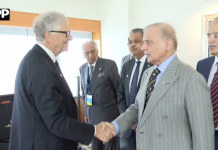
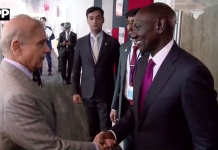
ISLAMABAD, Jun 24 (APP): Special Assistant to Prime Minister (SAPM) on Information and Broadcasting, Dr Firdous Ashiq Awan Monday said that Prime Minister Imran Khan’s participation in Shanghai Cooperation Organization (SCO) was a driving force to present positive image of Pakistan at the international platform.
Speaking as the chief guest here at a roundtable discussion titled: “Post Bishkek Shanghai Cooperation Organization Summit 2019 Lessons Learnt and Way Forward,” she said that Shanghai Cooperation Organization (SCO) genuinely recognized youth’s potential of Pakistan.
The discussion was organized by Pakistan Shanghai Cooperation Organization Friendship Forum (PSCOFF) and Centre for SCO Studies-Institute of Peace and Diplomatic Studies (IPD) here at a local hotel.
She said, “SCO registered Pakistan as member on youth affairs which has helped us to promote our true asset before the global fora.”
“Pakistan is fortunate to enjoy favourable ties with Kyrgyz republic and other Central Asian states. Kyrgyzstan in particular played a key role in successfully organizing SCO Summit 2019 and it is imperative to thank them for the hospitality her dignitaries have presented to Prime Minister Imran Khan,” she said.
Pakistan’s participation at the SCO Summit had underscored the nation’s willingness to extend cooperative ties to like-minded countries with an aim to maximise economic linkages to its neighbours, countries in Central and South Asian region as well as China, she added.
Pakistan’s partaking in the conference under the leadership of Prime Minister Imran Khan was to extend cooperative ties to like minded neighbouring countries and economic linkages with them in Central and South Asia region, she added.
“I am proud to say that Pakistan provides essential gateway to China to access Middle East, Arab states, Central and South Asian countries. China Pakistan Economic Corridor (CPEC) under Belt and Road Initiative (BRI) has increased its significance many times higher. Pakistan has fought a long war against terrorism and is determined to eradicate the menace not only from the region rather the world over,” she said.
Pakistan had always strived to establish and enhance trade and innovation for which it continued to seek participation at international forums like the SCO. However, it also had the desire to alleviate the ills prevailing in South Asia especially illiteracy, poverty, malnourishment and disease, she said.
“Pakistan is a country rich with enterprising human resource, remarkable tourism potential, and a huge agrarian ecosystem. The country’s foreign policy rests on the foundations of a sustainable narrative reflective of peace, stability and friendship,” Firdous said.
She highlighted that Prime Minister Imran Khan in his speech at SCO Summit proposed a multi-faceted forward-looking course of action to maximise the profits of the close partnership that members of the SCO Summit enjoy.
“Prime Minister’s interaction with Russian President Vladimir Plain on the sidelines of the Summit has brought to the forefront the countries’ earnest desire to build and foster good relations with each other,” she said.
Ambassador of Kyrgyzstan Erik Beishembiev said the SCO member states at the Summit had expressed their intention and deep concentration for countering extremism and terrorism. They had condemned terrorism in all its forms.
He said the SCO members had supported the government and people of Afghanistan for peace process whereas they would also continue cooperation in defence, security, training and other core issues of mutual cooperation.
However, more than 20 documents were signed including anti-drugs trafficking and trade strategy, agreements on promoting media, sports and physical fitness activities among the SCO member countries, the Kyrgyz envoy said.
“Kyrgyzstan has full confidence in CPEC project for regional development and will help explore regional markets on daily basis. Pakistan should develop a quadrilateral transport route among Pakistan, China, Kazakhstan and Kyrgyzstan,” he noted.
However, Institute of Peace and Diplomatic Studies President Farhat Asif, DG SCO Division, Ministry of Foreign Affairs Syed Naveed Safdar Bokhari, Prof. Zamir Ahmed Awan, Sinologist, National University of Science and Technology, Dr. Muhammad Khan, Professor, Department of Politics and International Relations, International Islamic University and Dr. Manzoor Afridi, Chairman, Department of International Relations, International Islamic University also expressed their views during the discussion.
VNS Islamabad